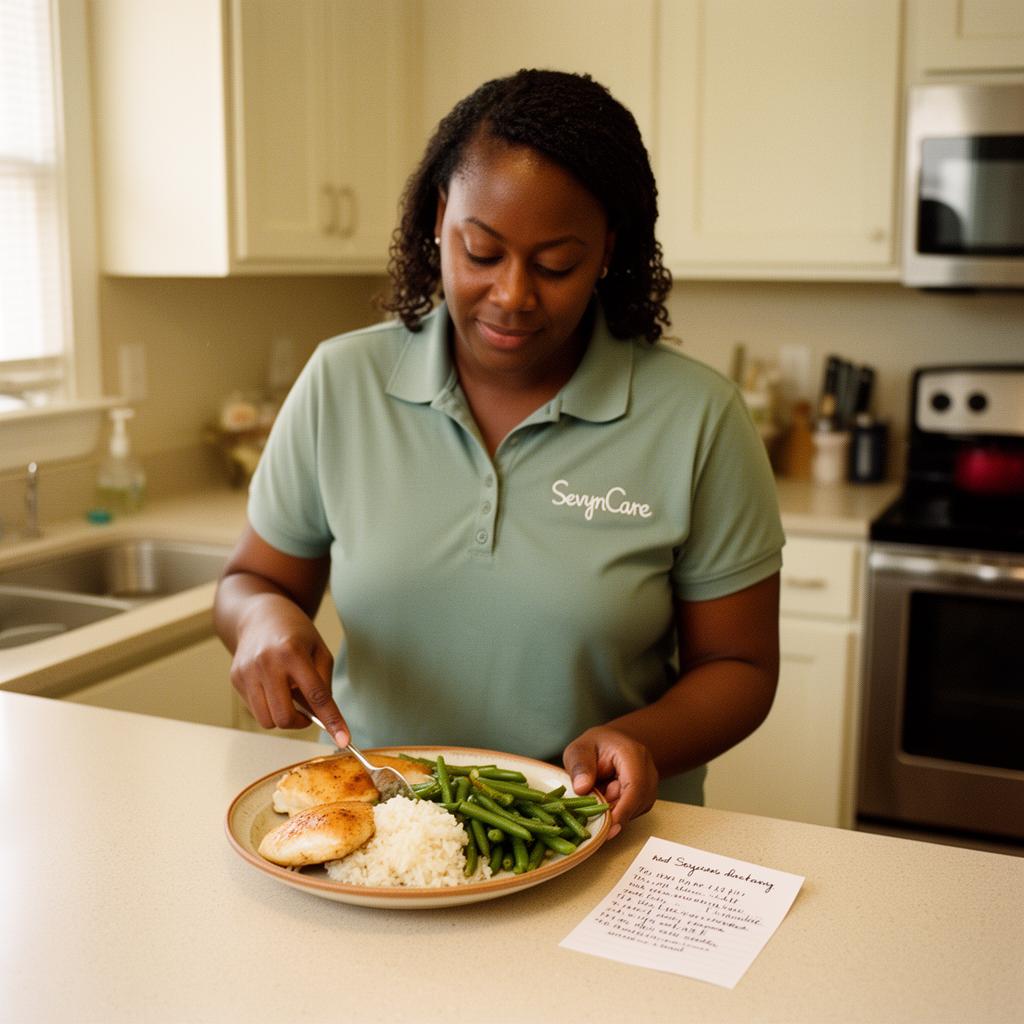
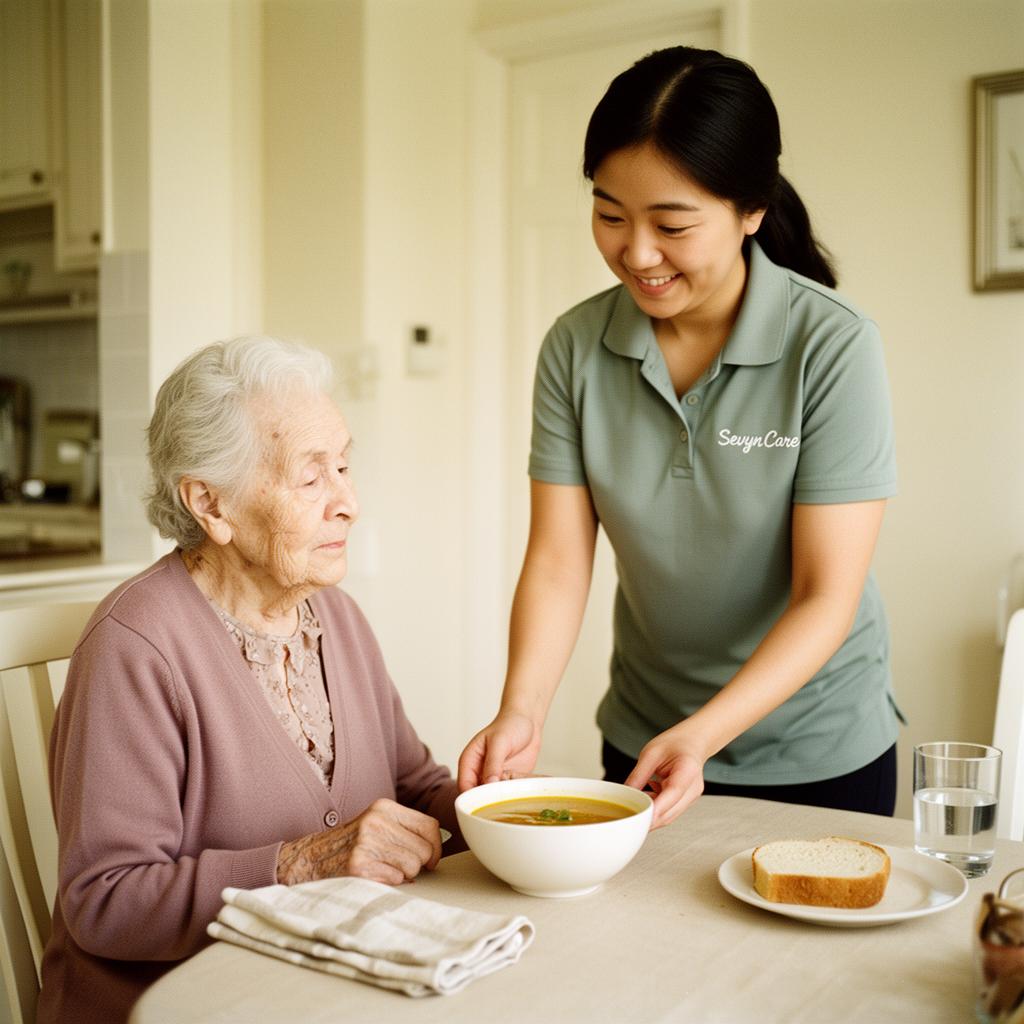
When energy fades, meals are often the first thing to suffer. Cooking feels like too much. Reheating something from the fridge for the third time this week becomes the new normal. Sandwiches replace dinner. The kitchen that used to be the center of the house becomes the room they avoid.
For your loved one, this is more than a nutritional issue — it's a quiet erosion of the rituals that make a day feel like a day. Breakfast is how the morning begins. Lunch is a reason to stop and rest. Dinner is the moment that closes one day before opening the next. When meals slip, so does structure. So does pleasure. So does the sense that someone cares enough to cook.
Our caregivers bring back the rhythm of home-cooked meals — non-medical meal preparation that respects dietary needs, honors familiar flavors, and treats every meal as a small act of care. We don't bring restaurant-style menus or trendy nutrition plans. We bring the kind of cooking that smells like a real kitchen, tastes like home, and reminds your loved one that someone is paying attention to what they eat.
Sometimes the kindest thing you can do is set a place at the table.