NON-MEDICAL MEMORY SUPPORT · HUNTSVILLE, AL

The disease changes. Who they are doesn't have to disappear.

Calm, dementia-trained caregivers who bring routine, redirection, and dignity into your loved one's day — and give your family back the version of them you still recognize.

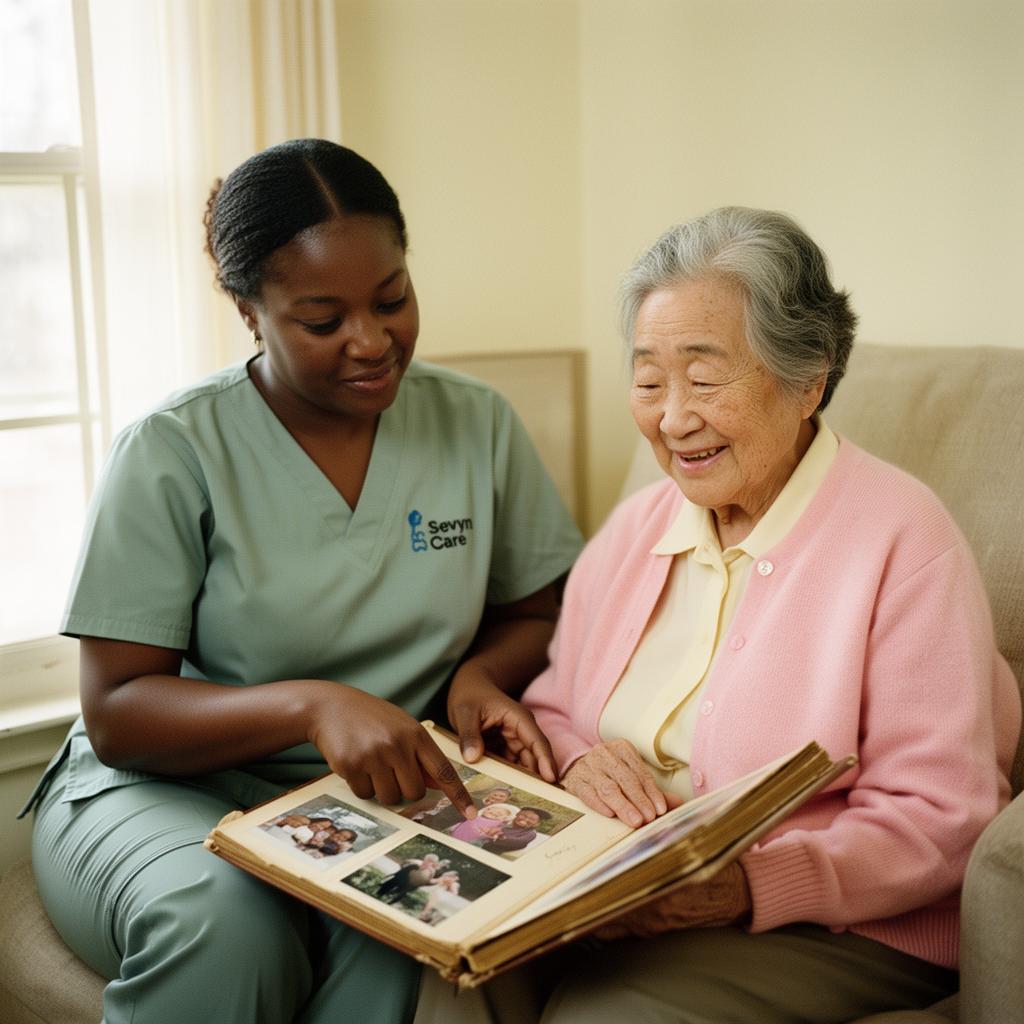
A caregiver sitting calmly with a senior, sharing a tender moment of attentive presence

WHAT MEMORY LOSS ACTUALLY ASKS OF A FAMILY

It isn't just the forgetting. It's the slow rewriting of every day.

At first it was a misplaced word, a repeated question, a missed appointment. Then it was the stove left on twice in a week. Then it was the moment they looked at you and you weren't sure, for a second, whether they knew who you were.

Dementia and Alzheimer's don't move in a straight line. There are good days and harder ones, lucid afternoons and confusing mornings, the version of them you grew up with and the version that needs a gentler hand to get through the day. Most families try to hold it all themselves for far longer than they should — because the love is enormous, and because asking for help feels like a kind of surrender.

It isn't. Memory support is the service we built our agency around. Our caregivers are trained specifically in dementia care — redirection, validation, calm pacing, safety supervision — and the family work that surrounds it. We come into the home as a steady, familiar presence so your loved one can keep being who they are, in the place they know best, for as long as that's possible.

"The disease takes a lot. It doesn't have to take the dignity."

WHAT'S INCLUDED

Six pieces of memory care — built around who they still are.

Every memory support plan is shaped by your loved one's stage, history, and personality. These are the cornerstones we build around.

ONE

Calm, predictable routine

For someone living with dementia, the structure of the day is the medicine. We arrive at the same time, in the same warm tone, and walk through the same gentle rhythm — breakfast, a walk in the yard, a favorite show, a quiet afternoon. Predictability lowers anxiety. Anxiety lowered means fewer hard moments, fewer accidents, and a longer stretch of the person your family still recognizes.

TWO

Redirection — not correction

When your mother asks for her own mother who passed forty years ago, the answer isn't 'she's gone.' The answer is a soft pivot to a happy memory of her, a cup of tea, a photo album, a song she used to hum. We're trained in validation and redirection — the techniques that keep your loved one feeling safe instead of confronted. The goal isn't to be right. The goal is for them to feel okay.

THREE

Safety supervision at home

Wandering, stove left on, doors unlocked, a fall risk that wasn't there last month. We're a steady set of eyes and hands during the hours of the day when leaving them alone has stopped being safe. Quiet supervision — without the institutional feeling of being watched.

FOUR

Personal care with patience

Bathing, dressing, toileting, grooming — done at their pace, with their dignity intact. Memory loss makes personal care vulnerable in a way it never was before. Our caregivers are trained to slow down, narrate gently, and let your loved one feel safe in their own body. We never rush a bath. We never make them feel like a task.

FIVE

Meaningful engagement

Music from their era. Old photographs. Folding laundry together. Snapping green beans on the porch. The activities that reach past the disease and touch who they still are. Engagement isn't 'keeping them busy' — it's giving the long-term memory and emotional self something to do while the short-term memory rests.

SIX

Respite for the family caregiver

If you've been caring for them alone — or with too little help — for too long, the most clinically important thing we can give your loved one is a rested you. We provide structured blocks of relief so you can sleep, work, see your own doctor, or simply sit somewhere quiet for an afternoon. You cannot pour from an empty cup. We're here to refill it.

WHAT MEMORY SUPPORT IS NOT

We're non-medical. Here's what that means for your family.

We don't diagnose, prescribe, administer medications, or make clinical decisions. Those belong to your loved one's physician, their pharmacist, and — if their care needs require it — a skilled home health agency or hospice team.

What we do is the day-to-day human work that surrounds those clinical pieces — the routine, the safety, the redirection, the gentle hand at bath time, the calm voice when the afternoon gets confusing. If your loved one has clinical needs we can't meet, we'll tell you honestly and help you find the right partner.

WHAT THIS LOOKS LIKE IN A HUNTSVILLE HOME

A late afternoon in a Blossomwood bungalow.

It's the hour the family has come to dread — 4:30, when Mrs. C starts asking for her mother, who passed in 1994. The caregiver doesn't correct her. She turns on the lamp by the chair, puts on the Patsy Cline record Mrs. C grew up hearing, and sits beside her with the green photo album. 'Tell me about this one — is that you in the garden?' By 5:15 the agitation has eased, supper is warming on the stove, and her husband — who's been her caregiver for three years — is on the porch with a glass of tea, the first quiet stretch of his day. Same caregiver, same time, same record. Routine is the medicine.

Available to families in Huntsville, Madison, Meridianville, Harvest, and the surrounding Madison County area, 7 days a week.

QUESTIONS FAMILIES IN MADISON COUNTY ACTUALLY ASK

Earlier than most families do. The most successful memory-support relationships begin while your loved one can still meet and remember the caregiver — usually mild-to-moderate stage. Starting in the calm window means the caregiver becomes a familiar face before the harder days arrive. If you're already in the hard days, we can still help — we'll just take the introduction more slowly.

A caregiver and senior together in a warm, comforting moment

IF YOU RECOGNIZE THIS

Have you been doing this alone — or with too little help — for longer than you ever expected?

Are you watching the disease progress faster than you can keep up with — and feeling helpless even when you're doing everything right?

Have you started to forget what it felt like to be a daughter, or a husband, or a partner — instead of just a caregiver?

You don't have to keep walking through this stage by yourself.

Memory support is what we built our agency around. A free consultation is the gentlest first step — twenty minutes of being heard by people who've walked this road with hundreds of families. We don't pressure. We don't push. We just help you see what could come next.

Calls reach a real person — not a call center or phone tree.

Compassion First. Excellence Always.

Reach SevynCare

Call, email, or schedule a free consultation.

Reach out the way that's easiest — a real person will be on the other end.

Our service area: every neighborhood across Madison County.

BY PHONE

(334) 209-5912

Tap to call →

Calls reach a real person, not a phone tree.

BY EMAIL

info@sevyncare.org

Open email →

We aim to reply to new inquiries within one business day.

OFFICE HOURS

Monday – Friday9:00 AM – 5:00 PM CT
Saturday & SundayBy appointment

Care visits happen seven days a week. Office hours are for new inquiries and scheduling.

WHERE WE SERVE

Huntsville & Madison County

Huntsville, AL 35808

Every neighborhood across the county — from downtown Huntsville and Twickenham to Madison, Five Points, Monte Sano, Hampton Cove, and beyond.

See our full service area →