
Memory Support
Living Alongside Hospice
How Non-Medical Care Supports End-of-Life Comfort
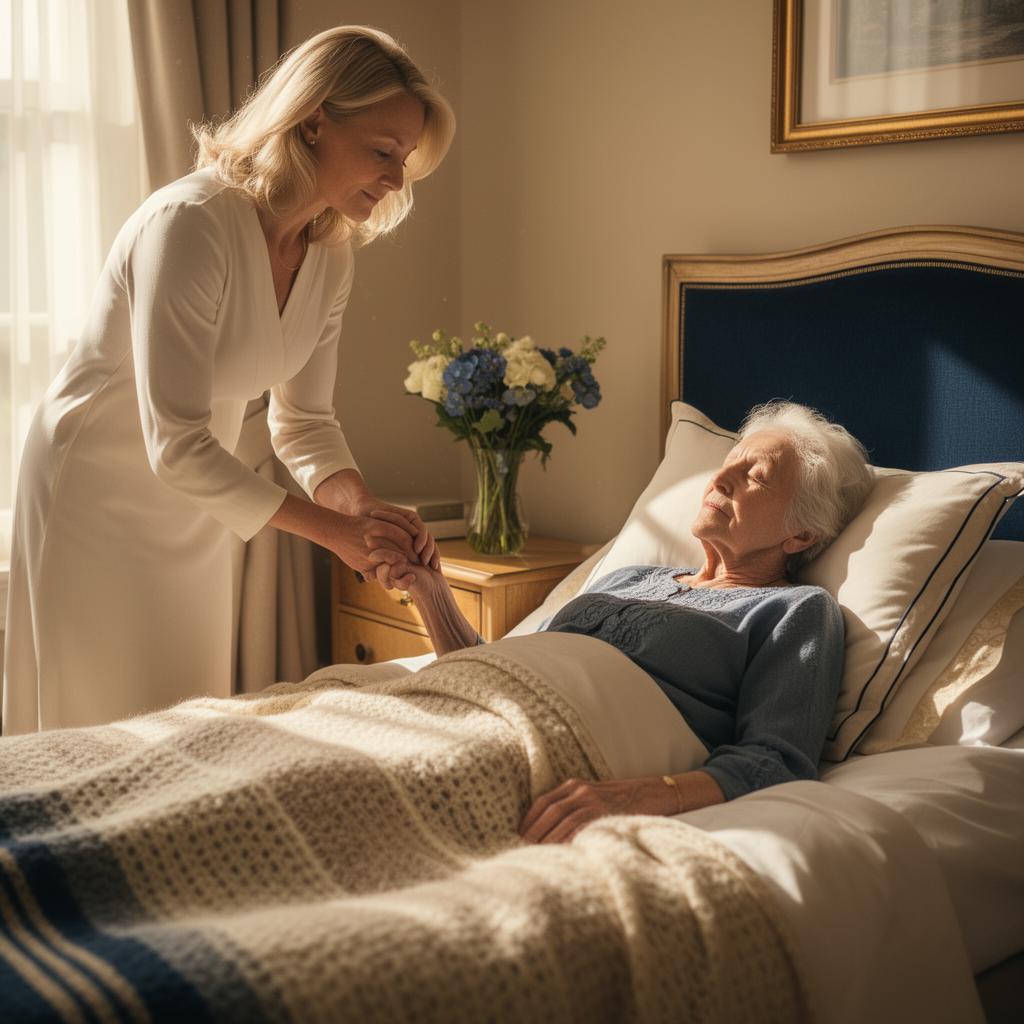
THE SHORT ANSWER
Hospice covers medical comfort care, but visits are intermittent. Non-medical home care fills the in-between hours — sitting, bathing, repositioning, supporting family. The two together are how most families in Huntsville keep a loved one at home through the end.
What hospice actually provides
Hospice in Huntsville (through providers like Hospice Family Care, Amedisys, and others) provides skilled nursing visits, a chaplain, a social worker, medical equipment, and medications related to the terminal diagnosis. A continuous-care benefit is available for crisis periods, but most days are covered by intermittent visits, not constant presence.
Why families almost always need more
Between hospice visits, someone still has to be there. Someone still has to bathe, reposition, offer ice chips, manage the bathroom, sit through the long nights, and answer the door when family arrives.
Family members try to do all of this themselves and almost always burn out within weeks. Non-medical home care is what makes it sustainable — and what allows the family to be family again, not just round-the-clock caregivers.
What a typical end-of-life home care schedule looks like
Early hospice: 8–12 hours/day, often in the daytime, so family can work and sleep.
Middle stage: 12–16 hours/day, with overnights added as nights become harder.
Final days: 24/7 live-in or shift care, so no one in the family has to choose between being present and being functional.
How we coordinate with hospice teams in Huntsville
We work closely with hospice nurses, sharing observations and changes between visits. We follow the hospice care plan and never duplicate or interfere with medical decisions. We're the steady, hands-on presence the medical team can't be.
What this looks like for the family
Families who use combined hospice and non-medical care almost universally describe the final weeks the same way: 'hard, but the way we wanted it.' They were present without being depleted. They had time to say what needed saying. They didn't miss the moment because they were doing laundry.
KEY TAKEAWAYS
- ◆Hospice and non-medical home care are complementary, not redundant.
- ◆Hospice visits are short and intermittent — the rest of the day still needs coverage.
- ◆Most families add overnight care first, then expand to 24/7 in final days.
- ◆Combined care lets family be family, not just shift workers.
FREQUENTLY ASKED
Quick answers for families
Does hospice pay for in-home caregivers?
Hospice covers short-term respite (typically 5 days in a facility) and brief continuous-care periods during crises. It does not pay for ongoing non-medical caregivers in the home — that's private pay, long-term care insurance, or VA.
Can SevynCare start care once hospice has already begun?
Yes. We routinely begin within 24–48 hours of a hospice referral, including same-day starts when needed for Huntsville-area families.
Is it okay to bring in home care if my loved one is dying — won't it feel impersonal?
Most families say the opposite happens. A consistent, gentle caregiver becomes part of the circle very quickly, and frees family to be emotionally present rather than physically exhausted.
SERVING HUNTSVILLE & MADISON COUNTY, AL
Want to talk through your family's specific situation?
Articles are a start. A twenty-minute conversation is where the abstract becomes specific — to your loved one, your situation, your family. No commitment, no sales pressure.