
Practical Guides
Helping a Loved One Stay Home Safely After a Stroke
Day-by-Day Support That Makes Recovery Possible
THE SHORT ANSWER
Stroke recovery is most successful when therapy continues at home long after the rehab unit ends. That requires consistent caregivers, safe transfers, fall prevention, communication support, and patience — for months, not weeks. The families that do best build a team early.
The first 30 days home are decisive
Most functional recovery after a stroke happens in the first three to six months. The first 30 days at home — when skilled home health is usually active — set the foundation.
After discharge from Huntsville Hospital's stroke unit or Encompass Rehab, families face a hard reality: the therapists leave eventually, but the recovery is far from done.
Safe transfers and fall prevention
Stroke survivors with hemiparesis (one-sided weakness) are at high fall risk for months. Transfers from bed to chair, chair to toilet, and in and out of the shower are the highest-risk moments.
- Always transfer toward the stronger side.
- Use a gait belt during transfers — non-negotiable in early recovery.
- Lock wheelchairs every single time.
- Keep a clear, lit path from bed to bathroom 24/7.
- Don't rush. Most falls happen during 'just one more step' moments.
Continuing therapy at home
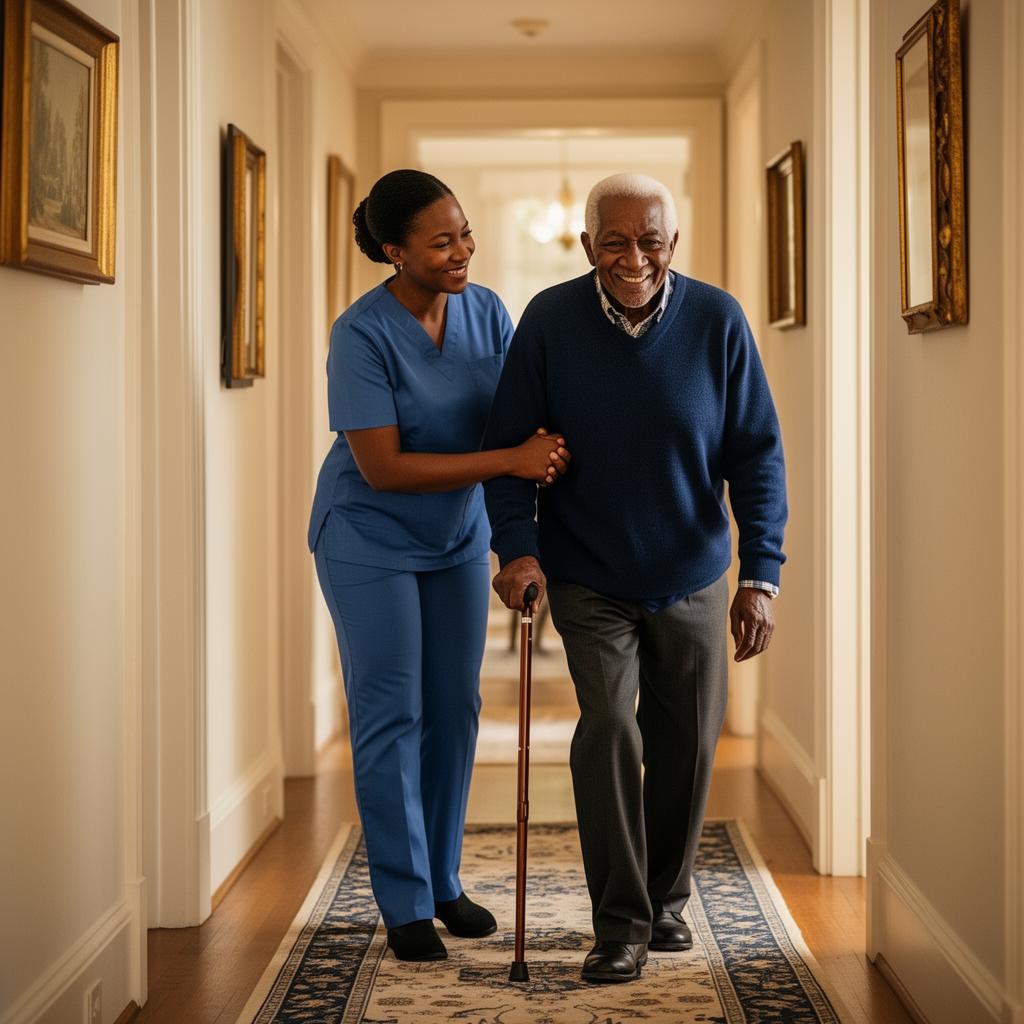
When formal PT, OT, and speech therapy end, the exercises shouldn't. A trained caregiver can run through prescribed daily exercises, cue speech practice, and help with assistive devices — extending therapy benefits long past the insurance window.
Communication and emotional recovery
Aphasia (difficulty with language) affects many stroke survivors and is exhausting for both sides. Slow down. Use short sentences. Don't finish their words unless they ask. Validate frustration.
Depression after stroke is common and undertreated. Watch for withdrawal, sleep changes, and loss of interest. Talk to their doctor early.
How home care fits in
Most Huntsville families bring in 6–10 hours/day of non-medical home care once skilled home health winds down. The caregiver handles transfers, exercise cueing, meals, medications, and the long hours between therapy visits — so the family can keep working, sleep, and stay sane through a recovery that often takes a year.
KEY TAKEAWAYS
- ◆The first 30 days home are the highest-leverage window in stroke recovery.
- ◆Safe transfers are the single most important safety priority.
- ◆Therapy must continue informally at home — a trained caregiver can carry it.
- ◆Depression after stroke is common. Treat it like any other recovery target.
FREQUENTLY ASKED
Quick answers for families
How long does stroke recovery typically take?
Most measurable recovery happens in the first 3–6 months, but gains continue for a year or more with consistent practice. Plateaus are normal and don't mean recovery is done.
Can a caregiver from SevynCare safely transfer my parent at home?
Yes. Our caregivers in Huntsville and Madison County are trained in safe transfer techniques, gait belt use, and one-person assist transfers. For two-person transfers, we staff accordingly.
Does Medicare cover home care after a stroke?
Skilled home health (PT, OT, nursing) is covered short-term. Non-medical care — the 8–16 hours a day most families actually need — is not covered by Medicare and is usually private pay, long-term care insurance, or VA.
SERVING HUNTSVILLE & MADISON COUNTY, AL
Want to talk through your family's specific situation?
Articles are a start. A twenty-minute conversation is where the abstract becomes specific — to your loved one, your situation, your family. No commitment, no sales pressure.